
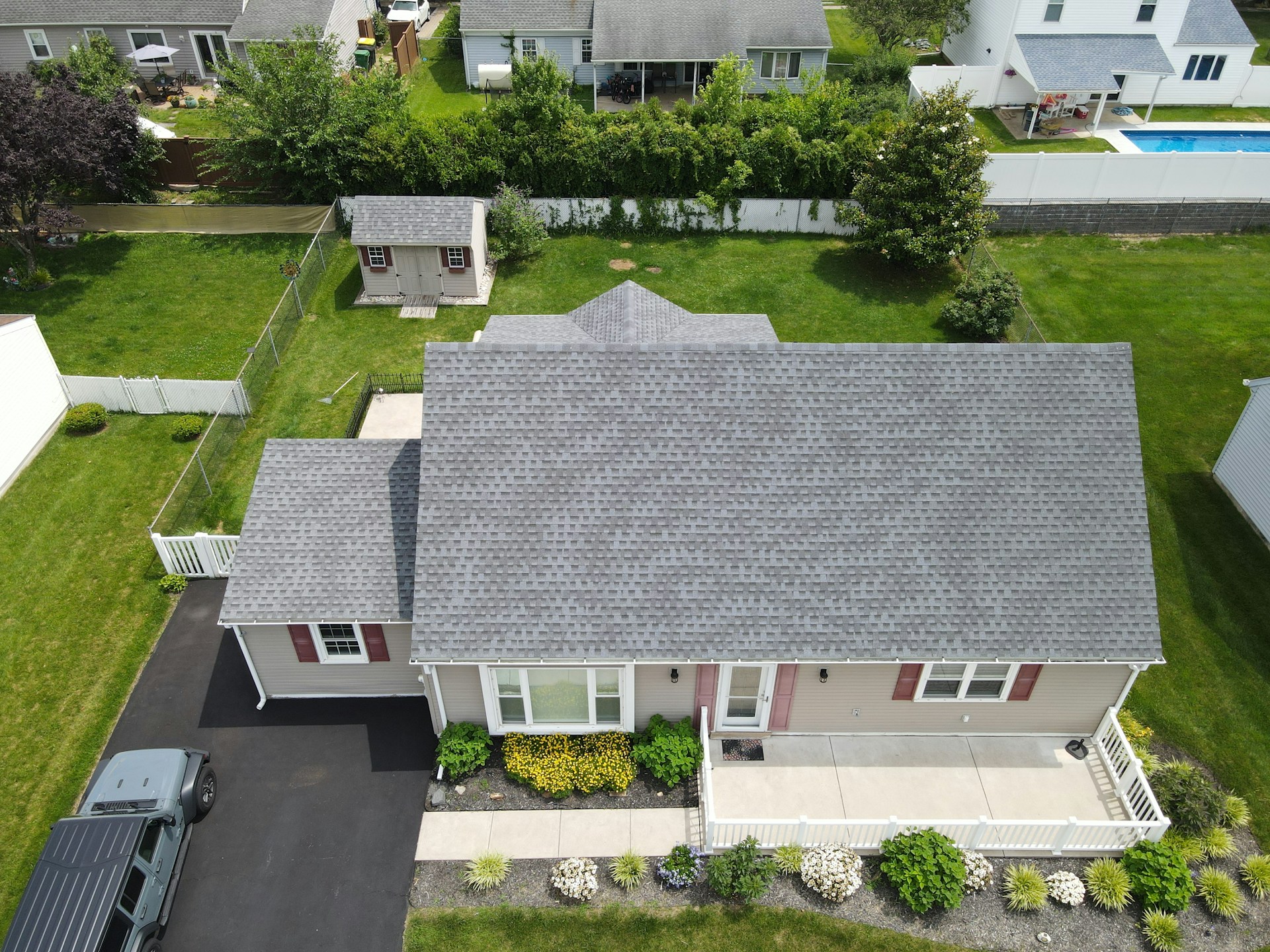
Walk into a roofing supplier and say you want vinyl, and the first question will be: which kind? That question catches a lot of homeowners off guard. Vinyl roof panels, vinyl roofing sheets and vinyl roof shingles all sound similar, yet they behave very differently on a real roof. Let me break down the main types in plain language so you can talk to your supplier with confidence.
A quick note before we start
If you searched for vinyl roof and found photos of cars, you landed in the wrong aisle. Here we are talking only about vinyl roofing material for houses, sheds, porches and small buildings.
Type 1: Vinyl roofing sheets (membrane)
This is the classic flat-roof option. Vinyl roofing sheets come in big rolls, and installers join the edges with hot air to create one sealed surface. You will often hear it called PVC or white vinyl roofing, because light colours are very popular for reflecting heat.
Best for: flat roofs, low-slope roofs, extensions, garages and porches.
Good points: very few seams, strong waterproofing, light weight, easy to keep clean.
Watch out for: it needs a trained installer, and sharp objects can puncture it.
Type 2: Vinyl roof panels
Vinyl roof panels are rigid or semi-rigid sheets, often ribbed or wavy, that are screwed onto a frame or purlins. People use them over patios, carports, sheds, balconies and workshops. They are quicker to install than a welded membrane and many handy homeowners can fit them with basic tools.
Best for: patio covers, small outbuildings and simple structures.
Good points: budget friendly, fast to fit, available in different lengths and colours.
Watch out for: panels can expand and contract with temperature, so fixing and overlap details really matter.
Type 3: Vinyl roof shingles and tiles
Vinyl roof shingles, also sold as vinyl roofing shingles or vinyl roof tiles, are shaped to look like slate, wood or clay. They suit sloped roofs where homeowners want the traditional look without the weight of real stone or clay. This category is less common than the first two, and quality varies a lot between brands.
Best for: sloped roofs where appearance matters.
Good points: lightweight, can imitate classic styles, easy to cut.
Watch out for: check the manufacturer’s wind, fire and weather ratings, and read the warranty carefully.
Side by side comparison
- Waterproofing: sheets are strongest because the seams are welded. Panels and shingles rely on overlaps and fixings.
- Installation: panels are the easiest. Sheets need a skilled welder. Shingles sit in the middle.
- Roof shape: sheets suit flat roofs, shingles suit sloped roofs, panels suit light structures.
- Look: shingles look traditional, sheets look clean and modern, panels look practical.
- Price: panels are usually cheapest, sheets and quality shingles cost more but may last longer.
How to choose in five steps
- Look at the pitch. Flat or nearly flat? Choose sheets. Steeper? Look at shingles or panels.
- Decide the purpose. A main house roof needs higher quality than a garden shed.
- Check the climate. Hot areas benefit from light colours. Windy areas need excellent fixing details.
- Set a realistic budget. Include fixings, flashing, edges, labour and delivery.
- Read the technical sheet. Thickness, UV protection, fire rating and warranty are all listed there.
What to ask the supplier
A good supplier will not mind questions. Ask what the material is made from, how thick it is, whether it has UV protection, what the warranty covers, and which accessories you will need, such as closure strips, screws with washers and sealant. Also ask for a sample, because holding it in your hand tells you more than any brochure.
Care and maintenance
No matter which type you pick, a little care goes a long way. Clean off leaves and dirt every month or two, wash gently with mild soap, and avoid pressure washers. Check fixings and edges after storms, and replace any loose screws or damaged pieces quickly. Small repairs now prevent leaks later.
Common mistakes
- Choosing panels for a main house roof that really needs a welded membrane.
- Forgetting expansion gaps, which can cause warping.
- Buying the cheapest thin material and replacing it in three years.
- Skipping flashing details at walls, pipes and corners.
- Walking on the roof without proper boards or soft shoes.
Final thoughts
Vinyl roof panels, sheets and shingles each have their place. Sheets win on flat roofs, panels on simple covers like patios, and shingles when you want a traditional look on a slope. Match the material to the roof shape and the job, ask smart questions, and you will end up with a roof that does its work quietly for years.